Skip to content

Songs
Without
Words

Songs
Without
Words

WHO
We Are

About Aphrodite – Jazz. Global. Immersive Soundscapes

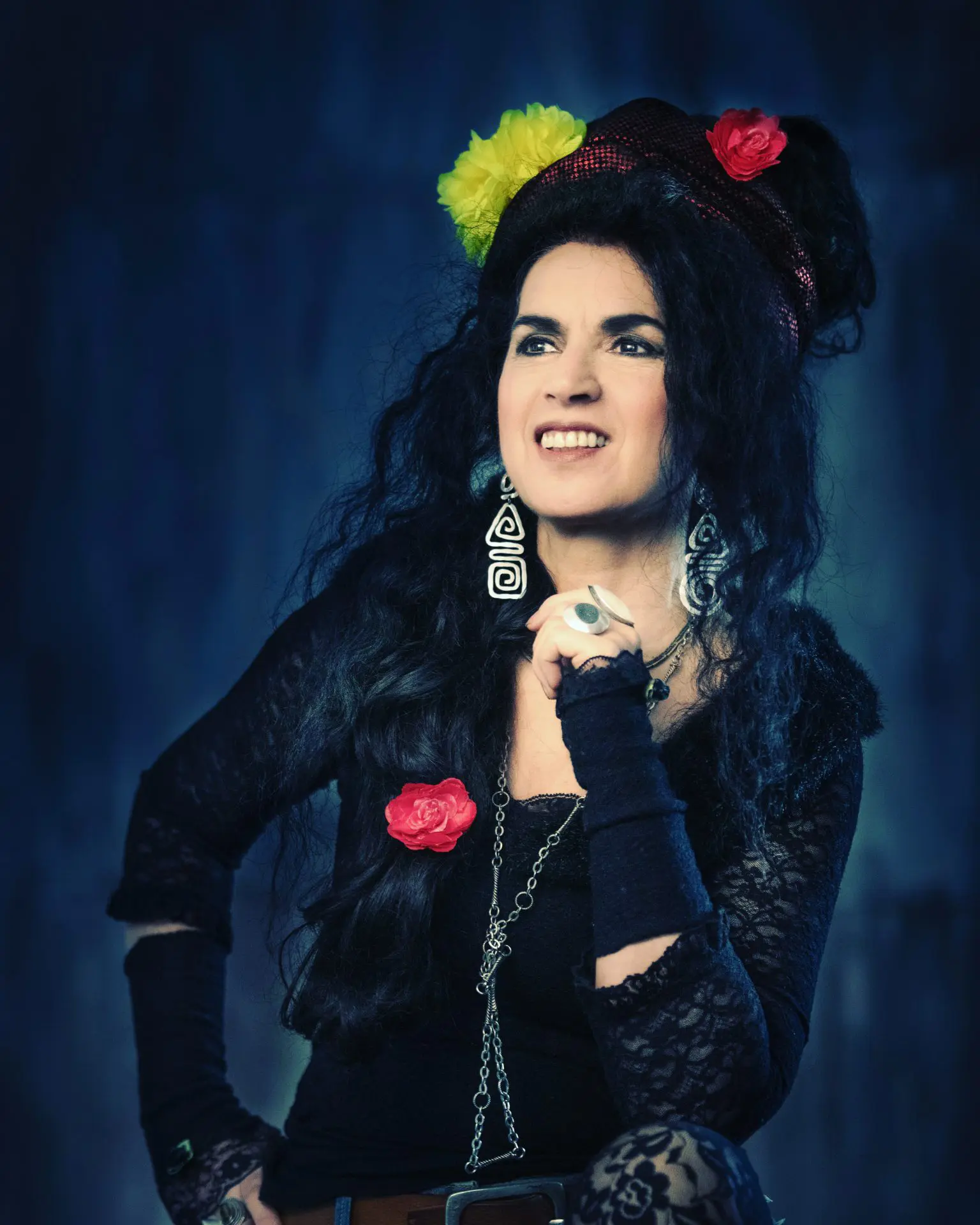
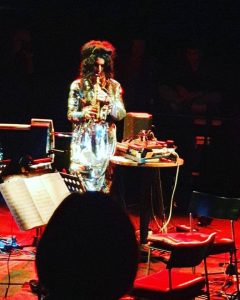
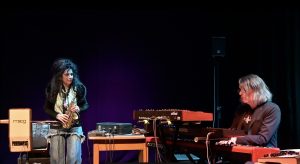
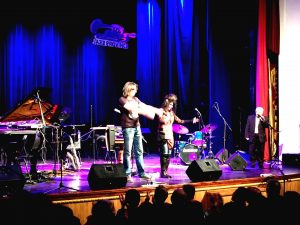
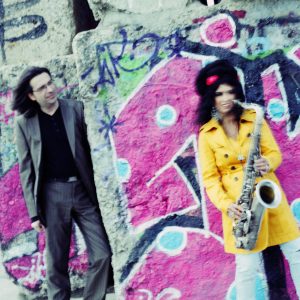
Gilda Razani – theremin, soprano saxophone
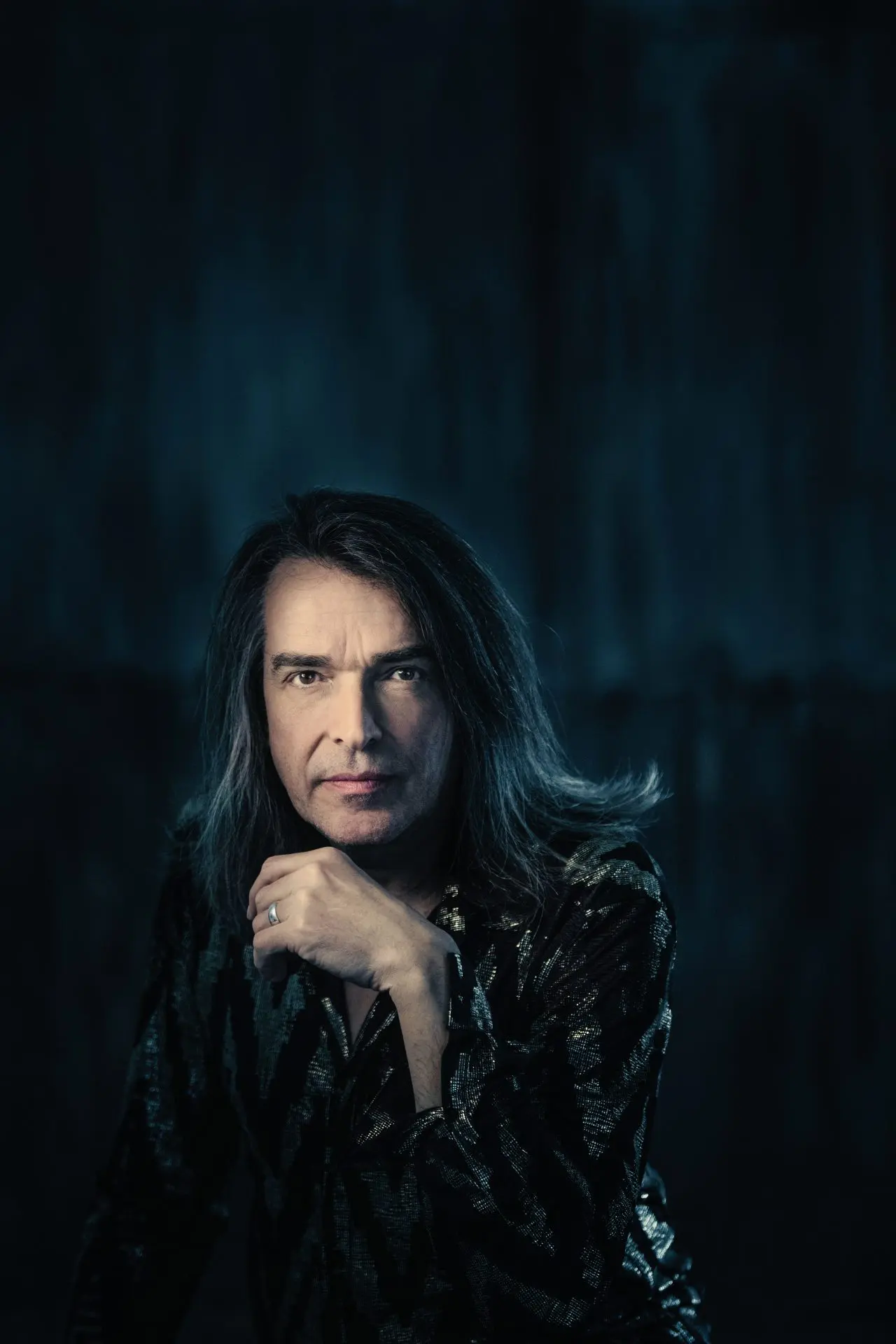
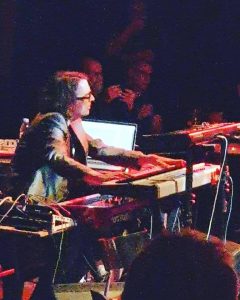
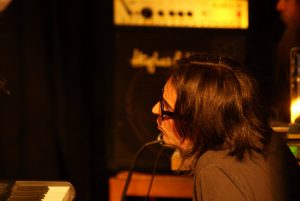
Hanzō Wanning – piano, synthesizer

About Aphrodite announce Songs Without Words—a poetic and immersive global soundtrack that moves through the world without needing a passport.

Drawing on Persian folk traditions, jazz, chamber music, synth-pop and electronic textures, the duo of Gilda Razani and Hanzō Wanning builds something entirely its own: a record that dissolves the boarders between genres.

The pieces on Songs Without Words showcase a dynamic interplay between carefully arranged compositions and spontaneous jam sessions, the melodies are often inspired by Razani’s Persian homeland. Razani and Wanning move effortlessly between dreamy lightness and deep longing—two musicians who have found a shared language precise enough to hold the world’s contradictions in a single phrase.

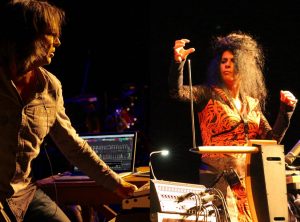
Razani performs on theremin and soprano saxophone, an exceedingly unique combination. Wanning anchors the duo on piano and synthesizers, building harmonic environments that shift fluidly between acoustic warmth and electronic depth. In some of the pieces, the lineup expands into a trio with percussionist Fethi Ak, whose command of the darbuka—rooted in Turkish and Kurdish musical traditions—adds a third pulse to an already richly layered sound.

Songs Without Words is more than a soundtrack for multicultural urban life. It’s a multilayered sonic tapestry—an invitation to drift, to dream, and to travel through distant parts of the world, as well as to return to one’s own inner landscapes.

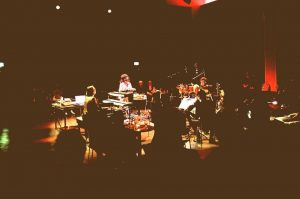
Whenever possible, the lineup expands into a trio formation with percussionist Fethi Ak.

Gilda Razani is widely regarded as one of the most innovative theremin players of our time. Using the world’s oldest electronic instrument, she creates immersive soundscapes that merge the boundaries between poetry, science fiction, magic, and deep emotions—most clearly heard on The Manhattan Transfer’s Grammy-nominated album Fifty. Razani holds a master’s degree in saxophone performance of the Detmold University of Music.

Hanzō Wanning is recognized for his distinctive musical style, seamlessly blending classical influences with jazz-pop harmonies and expressive improvisation. His piano playing is marked by a lyrical, often melancholic tone shaped by complex harmonic structures and dynamic rhythmic shifts. Wanning studied piano and classical composition in Hilversum, Netherlands, and won the European Jazz Award in Belgian 2010. He also brings extensive expertise in electronic music and teaches at the University of Dortmund and the Glenn Buschmann Jazz Academy.

Fethi Ak precise and stylistically open playing combines traditional rhythms with modern musical approaches and complements About Aphrodite organically. Ak began playing the darbuka at Turkish weddings during his childhood. Today, he is considered one of Germany’s most virtuosic darbuka players and is a highly sought-after musician for studio recordings and live performances within the Turkish, Kurdish, and international world music scenes. In 2017, he won the WDR Jazz Award with the Transorient Orchestra and has twice been a laureate of the world music competition “Creole.”

Together, Gilda Razani and Hanzō Wanning compose and produce original film scores and radio play music for the German broadcaster WDR, in addition to releasing their own albums, including Bazaar (Traumton Records, Berlin), Ocean Lily, Faktor X (Atzek Electronic Music, Melbourne), Polaris, Future Memories, and Little Deep Miss Strange(Floating World Records, London). They are also the founders of the sound-branding agency Honeysounds.

Their current musical projects include Honey Bizarre, About Aphrodite, and Amaryllis.

Festivals Fusion (DE), Skandaløs (DE), Les Digitales (CH), Spirit of the Woodstock (I), Tropentango (DE), Jazzprovence (RU), Klangtherapie (DE), Zurück zu den Wurzeln (DE), Summerjazz( DE)

Songs
Without
Words

Sie sehen gerade einen Platzhalterinhalt von Spotify. Um auf den eigentlichen Inhalt zuzugreifen, klicken Sie auf die Schaltfläche unten. Bitte beachten Sie, dass dabei Daten an Drittanbieter weitergegeben werden.

Mehr Informationen
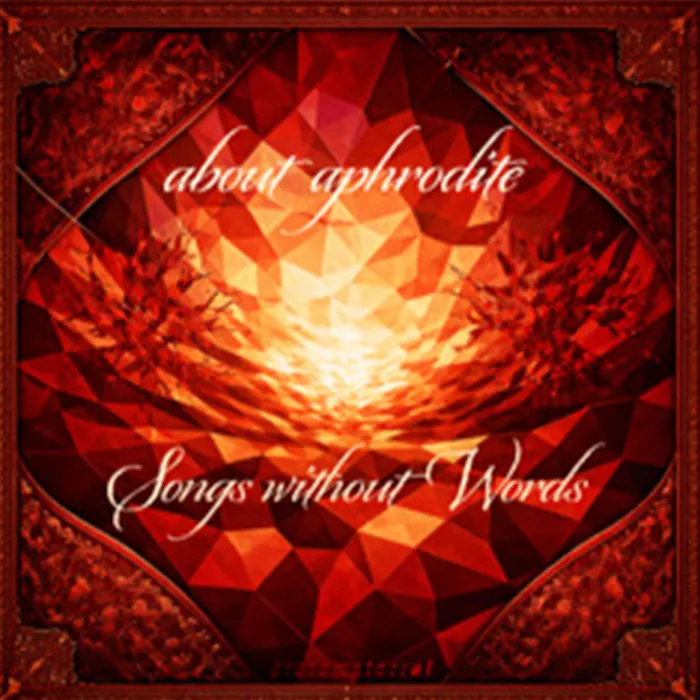

Songs Without Words

Protomaterial Records 2026

Heroine of the Night

Protomaterial Records 2026

Sartschubeh

Protomaterial Records 2026

Future Memories

Floating World Records 2020

Membran Music – Polaris

Floating World Records 2018

Faktor X Techno

Faktor X

Aztek Electronic Music 2015

ocean-lily-cover

Ocean Lily

Aztek Electronic Music 2014

ocean-lily-cover

Ocean Lily, vinyl

Double limited LP 2014
Show
and
Tour dates

26.02.2027
19:30
Tübingen
Sudhaus
place of transformation concert
04.02.2027
19:30
Berlin
Haus Der Sinne
tango feel venue at Prenzlauer Berg
21.01.2027
19:30
Oberhausen
Gdanska
Jazz Carousel series curated by Eva Kurowski with Fethi Ak percussion
17.10.2026
19:30
Hamburg
Tschaikowsky - Saal
chamber music hall concert
10.10.2026
19:30
Nürnberg
Villa Leon
special guest Fethi Ak percussion
12.09.2026
19:30
Bernau
Galerie im Hühnerstall
concert in a real chicken coop, which is also a gallery by Wilfried Staufenbiel
11.09.2026
19:30
Berlin
TerzoMondo
concert in the greek bar from actor Kostas Papanastasiou
23.08.2026
15:00
Buchholz - Oberscheid
Taftahü Festival
jazz, art and avantgarde festival
07.08.2026
19:30
Pinneberg
summerjazzfestival
summerjazzfestival special guest Fethi Ak percussion
07.05.2026
19:30
Dortmund
Parzelle im Depot
Iran solidarity concert - special guest Fethi Ak percussion
06.02.2026
19:30
Bochum
Bochumer Kulturrat
special guest Fethi Ak percussion
30.10.2025
20:00
Dortmund
Domicil
wordclub with Nava Ebrahimi, Thomas Koch and Cornelius Pollmer
21.09.2025
17:00
Unna
Nikolaihaus
composer concert at the International Library of Women Composers
10.09.2025
20:00
Essen
Katakombentheater
Jazz for the People

Booking
and
Mailing

    I have read and understood the privacy policy and agree that my data may be stored and processed for the purpose of responding to my inquiry.

    Reviews

    Blending cultures, genres, and emotions with remarkable elegance, About Aphrodite’s Songs Without Words transcends linguistic boundaries. In this interview, the duo discusses musical alchemy, Persian influences, artistic connection, and the universal language of music.

    1. “Songs Without Words” blends Persian folk traditions, jazz, chamber music, synth-pop, and electronic textures into a remarkably unified sound. How did you approach weaving such diverse influences together while maintaining a cohesive artistic identity?

    We are very familiar with the various stylistic elements that make up “Songs Without Words”; we have considerable experience with each one of them. That is why blending them — while simultaneously preserving or even forging a new identity — does not feel difficult. Of course, it involves a bit of musical alchemy, in the hope that the whole will amount to more than the sum of its parts, but when you know the individual elements and their effects well, the chances of success certainly improve!

    2. The album’s title suggests communication beyond language. What emotions, stories, or experiences did you hope listeners would discover through these instrumental compositions?

    What the six “Songs Without Words” have in common, among other things, is that they are all based on simple, highly lyrical melodies. Their harmonic structures are uncomplicated, too.

    Frequently we break out of this framework through improvisation, yet we always return to it, making it very easy and inviting to follow our little stories.

    Moreover, the musical category of “Songs Without Words” is deeply Romantic in spirit. It embodies the hope that there exists a form of poetry beyond spoken language — one that is deeper and fosters a stronger sense of connection than words alone allow. One might think of it as a reverse Tower of Babel: the possibility of telling stories and conveying emotions across all linguistic barriers.
    Yet these emotional worlds remain open; they emerge in the space between the telling and the listening.

    3. Gilda, your combination of theremin and soprano saxophone is highly distinctive, while Hanzō’s piano and synthesizer work creates rich sonic landscapes. How did your individual musical backgrounds shape the creative dialogue at the heart of this record?

    Let me start with a little anecdote: one night, I actually dreamt that I could play the theremin, and the next morning I had an overwhelming desire to turn that dream into reality. I told Hanzō about it, and he initially thought I was crazy. But no sooner said than done! In a way, the theremin found its way to me; ever since, I’ve been a saxophonist and thereminist — or the other way around.
    Hanzō is an experienced jazz pianist who also studied classical composition. He has always had a keen interest in electronic music, too. Building on this foundation, we’ve embarked on so many musical journeys — spanning acoustic jazz, world music, techno, ambient, and every conceivable crossover project. The current chapter of our shared story is “Songs Without Words”.

    4. Several tracks draw inspiration from Persian culture and history, including “Sartschubeh,” “Newrusi Cats,” and “Taraneh.” Could you share how these cultural references influenced the compositions and why it was important to bring these stories into the album?

    As a Persian woman who grew up in Germany, I am naturally shaped by both Eastern and Western culture and history. That may sound like a cliché, but it is simply the case.

    While there is much to be said about this multicultural background, one aspect is particularly important to me: we never actually set out to create an album with such a distinctively Oriental influence. It just happened organically; looking back, it might seem as though we had deliberately chosen a specific theme, but that wasn’t the case.

    Many subconscious processes were at play. Of course, we aren’t prophets, but the fact remains that shortly after we finished *Songs Without Words*, Iran increasingly moved to the center of global politics. Naturally, our positive sentiments and solidarity lie with the Persian civilian population — a people battered from both within and without.

    5. A recurring theme throughout the project is the idea that “music has no passport.” In today’s increasingly divided world, what role do you believe cross-cultural collaboration and artistic exchange can play in fostering understanding between people?

    We firmly believe in the unifying power of art in general, and music in particular. Simply because we have never known anything other than being musicians, we can easily jam with musicians from anywhere in the world and always find a common language.

    Moreover, our tours through a wide variety of countries have taught us one thing for certain: people everywhere share more or less the same idea of what constitutes a fulfilling life. Yet the opportunities to achieve such a life are distributed so unfairly, and the problems are vast and far-reaching. They are global in nature and, of course, can only be solved globally.
    If we had a common language at the level of global politics — the kind that comes so naturally and is so welcomed among musicians from diverse cultural backgrounds — the world would be a better place!

    6. With “Songs Without Words” now reaching audiences worldwide, what do you hope listeners take away from this musical journey, and what are the next creative horizons for About Aphrodite?

    After recording this album and listening to it in its entirety, we realized what we want to convey to our listeners. We aim to transmit a sense of lightness and the joy of living through our music, coupled with a touch of melancholy. Our music is meant to uplift, not weigh you down.

    With About Aphrodite, we already have a fair amount of new, unreleased material. What might be the shared focus of these new tracks — and those yet to come? We’re excited to find out ourselves!

    theinterviewist.com

    About Aphrodite presents „Songs Without Words“ – a poetic and captivating global soundtrack that travels the world without needing a passport. Drawing from Persian folk music, jazz, chamber music, synth-pop, and electronic sounds, the duo of Gilda Razani and Hanzō Wanning creates something entirely unique: an album that transcends genre boundaries. This is how the official press text describes the album.

    The album opens with the track „Sartschubeh“; it’s the Persian word for turmeric. In Persia, it’s customary to place turmeric on a newborn’s head, as the plant is said to bring good fortune. This sets the mood for the music to come: we hear what sounds like exotic bird voices. But it’s actually the sound of a theremin. This is a contactless electronic musical instrument developed in 1920 by Leon Theremin. Gilda Razani plays this instrument, which brings us „jungle sounds,“ according to our listening impression. There also seems to be flute sounds and percussive elements mixed in. Spherical soundscapes emerge as we continue listening. The ethereal sounds rise above Hanzō Wanning’s changeable keyboard playing. His piano work gradually pairs with the „soprano saxophone song,“ thanks to Gilda Razani. Due to the repeating sound motifs, the music has something quite hypnotic about it. At the same time, the music floats along, light, almost transparent. Toward the end of the piece, we hear once again a „concert of birds,“ exotic birds like loris and cockatoos, as one might imagine. Synth soundscape is woven together with keyboard sounds and a steady click-clack. And then you hear the theremin again, as if it were the antipode of the keyboard instrument, if you will. But the last note belongs to the soprano saxophone, doesn’t it?

    After the first piece, we hear „Loretta’s Sinfonia.“ This seems to be more of a story about Loretta the dancer rather than a classical symphony. The melody has a slightly oriental touch with „saxophone frenzy“ and rattle sounds as well as spherical music. On the darbuka or frame drum, we experience Fetih Ak, while at the piano, the pianist acts as if he wants to stage musical rapids. Exotic sound is thanks to the theremin. It harmoniously unites with the keyboard playing. Listening to this, one can experience a dancer’s turns. The movements are both powerful and graceful. And to this, we hear the sound of the theremin, exquisite electronic music that sounds as if Wurlitzer piano and Fender Rhodes were being merged.

    In the next piece, we hear rising wind and high-pitched keyboard playing. At the same time, we have the listening impression that an oriental flute or a zurna can be heard. But it’s saxophonist Gilda Razani who gives us this listening impression with her soprano saxophone. „Newrusi Cats“ is about the Persian New Year festival on March 20th. We experience musical exuberance, though not exactly overflowing. And the theremin can be heard again. The sound has something of space rock and electronic music like Mike Oldfield, doesn’t it? The piano playing appears more earthy and grounded. Gilda Razani lets sound clouds be heard when she makes her woodwind resonate. There’s nothing heavy about it. The motto is: Life is beautiful. Enjoy it.

    After „Taraneh,“ the „Heroine of the Night“ is sung. The piano passages are intense, offering strong rhythmics. The theremin sounds like a singing voice, rising to high soprano. A certain orchestral brilliance dwells within the piece, so that the reviewer had to think of Alan Parsons Project here and there. And at the end, a dream is musically realized: „Reverie.“

    jazzhalo.be

    About Aphrodite’s Songs Without Words moves like a lantern carried through several cities at once: warm in the hand, flickering with histories, and always catching some new edge of the room. The duo of Gilda Razani and Hanzō Wanning treat genre less as a set of borders than a series of invitations, allowing Persian folk echoes to drift into jazz harmony, chamber-like precision, synth-pop shimmer, and electronic haze. What emerges is music with a rare sense of scale. It can feel close enough to hear the breath inside it, then open suddenly into something wider and more weathered, as if each piece is finding its own horizon.”

    Razani’s presence gives the project much of its strange, searching centre. Theremin and soprano saxophone make for an uncommon pairing, and on Songs Without Words they become two different forms of longing. The theremin glides with an almost spectral delicacy, its lines hovering like light caught in fog; the saxophone answers with breath, grain, and a distinctly human edge. Where one instrument seems to dissolve into air, the other pulls the music back toward the body. Wanning’s piano and synthesizers deepen that dialogue, shaping harmonic spaces that move between acoustic warmth and a cooler nocturnal pulse. When percussionist Fethi Ak enters on darbuka, the album gains another kind of heartbeat, one rooted in Turkish and Kurdish tradition and felt as much in the chest as in the ear.

    Part of the album’s force comes from the tension between design and discovery. These pieces often feel carefully composed, with gestures placed deliberately and textures given room to bloom, yet they also carry the looseness of players listening closely to one another in real time. A passage can seem suspended, almost weightless, before rhythm or melodic instinct tilts it somewhere unexpected. That balance suits the record’s emotional weather. It moves through dreamy lightness, inward reflection, and quiet longing without pressing too hard on any single feeling. The restraint matters; rather than dramatizing emotion, About Aphrodite let it gather slowly.

    The track titles deepen that sense of myth meeting lived experience. “Sartschubeh” nods to turmeric and good fortune, grounding the music in colour, ritual, and blessing. “Loretta’s Sinfonia” unfolds in two movements, beginning in slowness before turning toward dance. “Taraneh” carries the weight of a short, courageous life, while “Heroine of the Night” and “Reverie” feel like scenes glimpsed through half-sleep: luminous, suggestive, and never fully fixed. Across the album, meaning often arrives through motion rather than explanation.

    In that sense, Songs Without Words is less interested in destination than passage. It crosses between cultures, between written structure and instinct, between solitude and shared rhythm. At a time when so much music is asked to define itself quickly, About Aphrodite choose drift, friction, and possibility. The album does not hand listeners a map. It invites them to stay attentive as the map redraws itself.

    songplode.art

    It is arguably one of the most striking combinations of modern jazz and highly sophisticated neoclassical music: we are talking about About Aphrodite’s new album ‘Songs Without Words’, which immerses us deeply in a dreamlike, atmospheric yet poignant landscape and reveals six striking compositions. 
    BerlinOnAir.de

    The duo About Aphrodite sets surprisingly fresh accents with its current album, due for release at the end of June on the label Protomaterial Records. The title *Songs Without Words* outlines a clear concept that runs throughout the entire recording. The pieces follow distinct compositional trajectories and develop narrative arcs without relying on language or vocals. In fact, these are songs in the truest sense: musical narratives whose dramaturgy emerges from melody, timbre, and movement. Gilda Razani’s soprano saxophone shapes the character of many compositions. Her tone remains fluid and clearly defined, shifting between virtuosic passages and restrained, chamber music-like moments. At times, this creates sonic landscapes reminiscent of those border regions between jazz and chamber music known from groups such as Oregon. Hanzō Wanning’s piano playing provides a warm counterbalance: arpeggios and melodic figures structure the pieces without pushing themselves into the foreground. On several tracks, the duo is joined by percussionist Fethi Ak. His darbuka, shaped by Turkish-Kurdish traditions, functions less as a driving rhythmic instrument and more as a sonic extension that structures the musical space with subtle differentiation. Often, it seems to surround the music rather than propel it. Particularly striking is the use of lyrical synthesizer textures, which gently expand About Aphrodite’s familiar sonic universe. Electronic textures slip beneath the acoustic instruments, opening new perspectives without overshadowing the organic character of the music. Across much of the album lies that peculiar suspension between melancholy and serenity, resisting any simple categorization. The spaciousness characteristic of About Aphrodite remains present, yet feels more deeply integrated into the compositional flow than on earlier releases. Gilda Razani’s theremin plays a special role here. This touchless electronic instrument does not appear as a technical curiosity or spectacular effect. Rather, Razani integrates its floating lines into a remarkably natural relationship with saxophone, piano, and electronics. Often, the theremin is barely distinguishable as an independent voice—and that is precisely where its impact lies. It expands the sonic space with a presence that is difficult to locate, giving the pieces additional depth. Where others demonstrate the instrument, Razani makes music with it. Several compositions draw on motifs and narratives from the Persian cultural sphere. “Sartschubeh” refers to a ritual for blessing newborns, while “Loretta’s Sinfonia” follows a dramaturgy moving from a calm beginning toward dance-like intensification. “Newrusi Cats” references the Persian New Year festival Nouruz, while “Taraneh” is dedicated to a young Iranian woman. These cultural references are not presented programmatically, but they form a recognizable resonance space within the music. The pieces often develop from repeating motifs and finely interwoven textures. This creates music that remains centered within itself without becoming static. Improvisational lines occasionally draw on ornamentations shaped by Eastern traditions, yet without slipping into folklore or world music clichés. A sign of maturity is, not least, the serenity with which About Aphrodite brings together different musical roots. Persian melodic language, Turkish rhythm, European jazz harmony, and electronic sound design meet here not as decorative ingredients, but as components of a developed musical language. *Songs Without Words* achieves its impact not through grand gestures or dramatic climaxes, but through concentration and consistency. The music moves between chamber jazz, electronic sound design, and the musical traditions of the Middle East without being clearly assignable to any one of these spheres. Its strength lies precisely in this openness. The pieces tell their stories quietly, yet with conviction—and reveal a formation that no longer needs to search for its own voice.
    nrwjazz.net

    … convinces with great composition and sound, one of the most fascinating duos of recent years. It is hard to escape the hypnotic charm of the music, which is both structured and complex. Highly recommended! (18/20)

    Music itself.de

    What Hans and Gilda achieve in this album can only be called an immersive audio experience. Out of melancholy undertones springs music full of tonal fantasy and lyrical depth, and behind the duo’s conscious and animated musical freedom lies a wealth of in-depth knowledge and experience”

    NRWjazznet.de

    … an album as brilliant as the stars in the sky, Membran Music takes ‘Polaris‘ as its theme. The instrumental cosmos, with Theremin, piano, soprano saxophone and live electronics moves from classical music to progressive jazz, but at the same time always retaining its dark colouring. It is unique in the same way as ABOUT APHRODITE! (13/15)

    Music reviews.de

    Contact

    CONTACT / BOOKING

    booking@aboutaphrodite.de

    An den Anfang scrollen About Aphrodite